ESI Registration for Companies: Employer Guide
By Adv. Saravvanan R, Advocate · Reviewed by Advocate · Updated · 10 min read · Tax & Labour Disputes
Short answer
ESI registration is required for covered establishments under the Employees' State Insurance Act, 1948 once they meet the employee number and wage limits set by the government. Employers register with ESIC, pay monthly contributions and keep records. Delay can lead to penalty and interest.
ESI Registration for Companies - Employee health protection supports business continuity, legal compliance, and workforce satisfaction. Therefore, every eligible company should understand the Employees’ State Insurance framework before commencing operations. The Employees’ State Insurance Act, 1948 creates a social security system covering medical care, sickness, maternity, disablement, and dependent benefits. Employers meeting statutory thresholds must complete timely registration through the Employees’ State Insurance Corporation (ESIC). Delayed registration often attracts inspections, contribution disputes, interest, penalties, and prosecution. Consequently, early legal guidance prevents avoidable compliance failures. Empower Legal - Corporate Law Firm assists companies, startups, factories, shops, IT establishments, service providers, and multinational businesses throughout India. Professional legal review ensures proper documentation, employee classification, contribution calculations, and statutory compliance. Moreover, proactive compliance reduces litigation risks before labour authorities, tribunals, and competent courts while protecting employer and employee interests.
ESI Registration for Companies: Employee Health Insurance Guide - Empower Legal - Corporate Law Firm
Understanding the Purpose of ESI Registration for Companies
ESI registration establishes statutory medical insurance coverage for eligible employees working in notified establishments. Additionally, registered employers receive a structured compliance framework supporting lawful employment practices. The scheme provides financial assistance during sickness, maternity, employment injuries, occupational diseases, and permanent disablement. Employees also receive dependent benefits after qualifying events. Companies strengthen workplace confidence by ensuring statutory healthcare access for eligible workers. Legal professionals review workforce strength, wage structures, employment categories, and operational locations before advising registration. Common legal concerns include delayed enrolment, incorrect employee classification, contribution defaults, inspection notices, and disputed wage calculations. Consequently, employers should maintain complete employment records supporting statutory compliance. Early legal consultation reduces enforcement actions while protecting organisational reputation and long-term operational stability.
Establishments Commonly Covered Under ESI Laws
Several commercial establishments require ESI registration after satisfying statutory applicability requirements. Therefore, employers should verify coverage before hiring additional employees. Common establishments include:
- Factories using power.
- Manufacturing units.
- Information technology companies.
- Business process outsourcing centres.
- Hotels and restaurants.
- Educational institutions where notified.
- Hospitals and diagnostic centres.
- Retail establishments.
- Warehousing businesses.
- Logistics companies.
- Private security agencies.
- Commercial offices.
Coverage depends upon applicable notifications, employee strength, wage limits, and state-specific implementation. Consequently, legal verification prevents incorrect assumptions regarding statutory obligations. Employers should regularly monitor legislative updates affecting establishment coverage and employee eligibility.
Eligibility Conditions Every Employer Should Verify
Every employer should examine statutory applicability before initiating business operations involving eligible employees. Accordingly, proper assessment prevents registration delays and compliance disputes. Important eligibility factors include:
| Compliance Factor | Legal Importance |
|---|---|
| Employee strength | Determines applicability |
| Wage eligibility | Identifies covered employees |
| Business activity | Establishes statutory coverage |
| Establishment location | Confirms notified jurisdiction |
| Employment records | Supports inspections |
| Salary registers | Verifies contributions |
| Attendance records | Confirms employee details |
| Registration timeline | Prevents penalties |
Professional legal review confirms compliance requirements before registration. Consequently, employers avoid unnecessary litigation, contribution disputes, and regulatory enforcement actions while maintaining lawful employment practices.
Documents Required for Successful ESI Registration
Accurate documentation accelerates registration while reducing administrative objections. Therefore, employers should organise statutory records before submitting applications. Common documents include:
- Certificate of incorporation.
- PAN and GST registration.
- Address proof.
- Directors’ identification documents.
- Employee details.
- Salary records.
- Bank account information.
- Business commencement proof.
Additional documents may apply according to establishment type and operational structure. Legal professionals verify document accuracy before online submission. Consequently, employers minimise rejection risks while ensuring smooth registration under applicable statutory requirements.
Legal Framework Governing ESI Registration in India
The Employees’ State Insurance Act, 1948 and corresponding regulations primarily govern employer registration and employee insurance obligations. Additionally, labour compliance intersects with the Code of Civil Procedure, 1908 (CPC) during civil proceedings wherever applicable. Fraud, document forgery, impersonation, or deliberate statutory violations may attract provisions under the Bharatiya Nyaya Sanhita, 2023 (BNS). Investigation procedures generally follow the Bharatiya Nagarik Suraksha Sanhita, 2023 (BNSS), while evidentiary matters rely upon the Bharatiya Sakshya Adhiniyam, 2023 (BSA). Employers should also consider notifications issued by the Employees’ State Insurance Corporation, the Ministry of Labour and Employment, and appropriate State Governments. Consequently, comprehensive legal compliance strengthens corporate governance while reducing regulatory exposure before labour authorities, tribunals, and competent judicial forums.
Common Legal Issues During ESI Registration and Compliance
Employers frequently encounter avoidable compliance issues because statutory obligations evolve regularly. Therefore, continuous legal monitoring remains essential. Common legal issues include:
- Delayed employer registration.
- Incorrect employee coverage.
- Contribution calculation errors.
- Wage misclassification.
- Inspection notices.
- Recovery proceedings.
- Employee benefit disputes.
- Record maintenance failures.
Companies may approach appropriate ESIC authorities for administrative resolution before litigation becomes necessary. Serious disputes may proceed before the Employees’ Insurance Court, competent civil courts where applicable, or constitutional courts exercising appropriate jurisdiction. Early legal representation improves compliance, strengthens documentation, and supports timely dispute resolution.
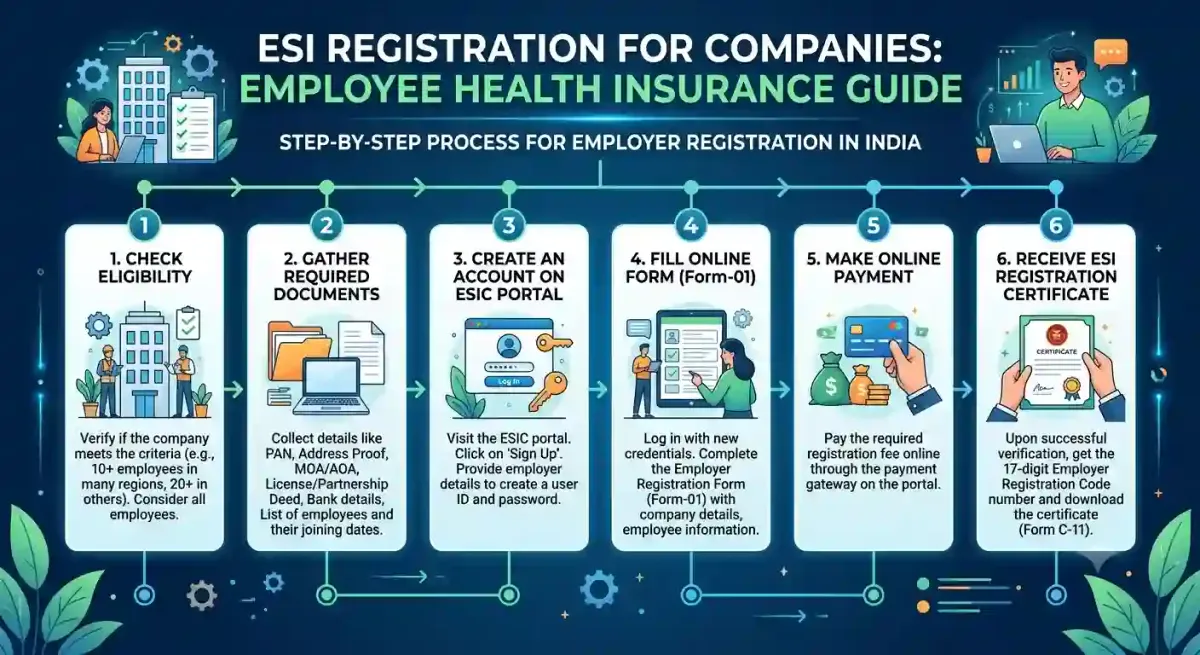
Employer Registration Process Under the ESI Scheme
Employers should complete ESI registration immediately after satisfying statutory applicability requirements. Therefore, timely registration avoids interest, penalties, and compliance notices from competent authorities. Businesses must create an employer account through the ESIC online portal and upload accurate establishment information. Supporting documents should match statutory records because inconsistencies often trigger inspections. Legal professionals verify employee details, wage records, establishment classification, and operational addresses before submission. Moreover, employers should preserve acknowledgement receipts and registration credentials for future compliance. The registration process generally includes the following steps:
- Verify ESI applicability.
- Create the employer account.
- Upload required documents.
- Register eligible employees.
- Generate insurance numbers.
- Maintain statutory records.
Accurate registration strengthens compliance while reducing future disputes before labour authorities.
Employer Responsibilities After Obtaining ESI Registration
Registration marks the beginning of continuous statutory compliance rather than the final obligation. Accordingly, employers should maintain accurate employment records throughout business operations. Timely contribution payments protect employee benefits and prevent recovery proceedings. Companies should also update employee information whenever salary, designation, or employment status changes. Internal compliance reviews help identify deficiencies before official inspections occur. Employers should regularly maintain:
- Employee registers.
- Attendance records.
- Wage registers.
- Contribution records.
- Accident reports.
- Inspection files.
- Identity records.
- Digital compliance backups.
Proper documentation supports legal defence during inspections and dispute resolution. Consequently, organised compliance reduces enforcement risks while demonstrating responsible corporate governance before statutory authorities.
Government Authorities Supervising ESI Compliance
Several government authorities oversee ESI implementation, employer compliance, and employee welfare across India. Therefore, employers should understand the jurisdiction of each authority before addressing disputes. The principal regulatory bodies include the Employees’ State Insurance Corporation, Ministry of Labour and Employment, Regional ESIC Offices, and State Labour Departments. Labour Inspectors conduct compliance inspections whenever statutory requirements demand verification. Appropriate disputes may also involve labour commissioners or designated administrative officers. The following table summarises important authorities:
| Authority | Primary Function |
|---|---|
| ESIC | Registration and benefits |
| Ministry of Labour | Policy administration |
| Regional ESIC Office | Employer compliance |
| Labour Department | Inspection support |
| Employees’ Insurance Court | Adjudication |
| High Court | Writ jurisdiction |
Legal representation ensures effective communication with every competent authority.
Legal Issues, Disputes, and Available Remedies
Employers occasionally receive contribution demands, inspection notices, recovery proceedings, or employee benefit claims. Nevertheless, many disputes resolve through proper documentation and legal representation. Businesses should respond promptly because delays may increase financial liability. Available legal remedies depend upon the dispute nature and applicable statutory provisions. Common remedies include:
- Filing written objections.
- Producing employment records.
- Seeking administrative review.
- Appealing before the Employees’ Insurance Court.
- Filing writ petitions before the High Court where appropriate.
- Negotiating lawful settlement wherever permissible.
Civil proceedings may follow the CPC wherever applicable. Criminal allegations involving fraud, forgery, or false records may attract the BNS, BNSS, and BSA. Early legal advice improves defence strategies and protects business continuity.
ESI Inspections, Enforcement Actions, and Corporate Risk Management
ESIC authorities conduct inspections to verify statutory compliance, employee eligibility, wage records, and contribution payments. Therefore, employers should maintain complete records throughout the business lifecycle. Inspecting officers may examine attendance registers, salary records, appointment letters, contribution history, and accident reports. Companies should cooperate professionally while protecting their legal rights during inspections. Experienced corporate lawyers review inspection notices before submitting explanations or supporting documents. Moreover, prompt responses often reduce unnecessary litigation and administrative complications. Non-compliance may result in contribution recovery, interest, damages, prosecution, or benefit disputes. Internal compliance audits identify deficiencies before official inspections occur. Businesses should train human resources teams regarding statutory obligations because informed compliance significantly reduces legal exposure and operational disruptions.
Penalties, Prosecution, and Employer Liability
Failure to comply with ESI obligations creates financial and legal consequences for employers. Consequently, businesses should implement structured compliance systems and periodic legal reviews. Delayed registration, incorrect employee classification, contribution defaults, record manipulation, or false declarations may attract statutory action. Civil proceedings generally follow the Code of Civil Procedure, 1908 (CPC) wherever applicable. Criminal allegations involving forged documents, cheating, or fabricated employment records may invoke the Bharatiya Nyaya Sanhita, 2023 (BNS). Investigation procedures follow the Bharatiya Nagarik Suraksha Sanhita, 2023 (BNSS), while evidentiary matters rely upon the Bharatiya Sakshya Adhiniyam, 2023 (BSA). Employers should seek immediate legal advice after receiving notices because timely representation frequently limits regulatory consequences and financial liability.
Courts, Tribunals, Forums, and Nearby Authorities
ESI disputes generally begin before competent administrative authorities before progressing to judicial forums where necessary. Therefore, employers should understand jurisdiction before initiating legal proceedings. The Employees’ Insurance Court decides several statutory disputes concerning contributions, benefits, and employer liability. Appropriate matters may also reach the High Court through writ jurisdiction or the Supreme Court of India through statutory remedies. Regional ESIC Offices, Labour Departments, and Labour Commissioners handle several administrative issues. Nearby police stations become relevant only when criminal allegations require investigation under applicable laws. Corporate lawyers coordinate with investigating authorities whenever necessary. Strategic legal representation strengthens documentation, protects procedural rights, and supports efficient dispute resolution before every competent authority.
Corporate Legal Support for Sustainable ESI Compliance
Professional legal guidance transforms statutory compliance into a valuable corporate governance practice. Accordingly, employers should obtain periodic compliance reviews instead of reacting after receiving notices. Empower Legal - Corporate Law Firm assists companies with ESI registration, contribution audits, inspections, litigation, employee classification, compliance management, and statutory advisory services. Lawyers also represent employers before ESIC authorities, Employees’ Insurance Courts, High Courts, and other competent forums. Businesses receive practical strategies that minimise disputes while strengthening employee welfare and organisational credibility. Regular compliance reviews improve documentation quality, reduce enforcement risks, and support lawful employment practices. Consequently, organisations build stronger workplaces while satisfying statutory obligations and protecting long-term commercial interests across India.
Frequently Asked Questions
1. Who must obtain ESI registration?
Eligible factories, shops, establishments, and notified businesses meeting statutory employee limits must complete ESI registration and comply with contribution requirements under applicable law.
2. What benefits do employees receive under ESI?
Eligible employees receive medical treatment, sickness benefits, maternity benefits, disablement compensation, dependent benefits, and several statutory healthcare facilities through ESIC.
3. What happens after delayed ESI registration?
Delayed registration may attract contribution recovery, interest, damages, inspections, prosecution, and additional legal proceedings depending upon statutory violations and supporting evidence.
4. Which authority resolves ESI disputes?
Administrative disputes generally involve ESIC authorities, while legal disputes commonly proceed before the Employees’ Insurance Court or constitutional courts where appropriate.
5. Can employers challenge incorrect contribution demands?
Yes. Employers may submit objections, produce supporting records, seek administrative review, file statutory appeals, or pursue appropriate judicial remedies under applicable law.
6. Why should companies hire corporate lawyers for ESI compliance?
Corporate lawyers prevent compliance errors, manage inspections, prepare legal responses, represent employers before authorities, and reduce litigation through proactive legal strategies.
Read More
- EPFO Registration: Provident Fund Compliance for Employers
- GST Registration for Companies: When and How to Register
- PAN and TAN Registration for Companies: Complete Process
- Post-Incorporation Compliance Checklist for New Companies
- Certificate of Incorporation: Understanding Your Company’s Birth Certificate
- Employees’ State Insurance Corporation (ESIC)
Frequently Asked Questions
Which employers must register under the ESI Act?
What benefits do employees get under ESI?
What are common ESI compliance mistakes?
Topics: ComplianceLabour LawGSTStartups & MSMEs
Related reading
This article is general information, not legal advice. Reading it does not create an advocate-client relationship. Read the disclaimer. Official sources: India Code, Bar Council of India.