Corporate Law Firm · Chennai
Arbitration & ADR in India: Complete Guide 2026
Arbitration and alternative dispute resolution in India means settling disputes outside regular courts through arbitration, mediation, conciliation or Lok Adalat. Arbitration is governed by the Arbitration and Conciliation Act 1996, mediation by the Mediation Act 2023, and commercial suits generally need pre-institution mediation first. Awards are enforceable like court decrees.
- Courts & tribunals across India
- Confidential consultations
- English & Tamil
- Offices in Chennai
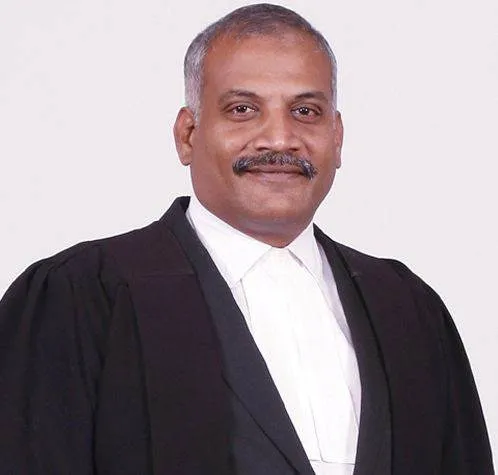
By Adv. Saravvanan R, Advocate · Reviewed by Advocate · Updated · 18 min read · Alternative Dispute Resolution
Arbitration and alternative dispute resolution in India give businesses a private, structured way to settle disputes without a full civil trial. The main routes are arbitration, mediation, conciliation and Lok Adalat. This guide explains each route, the laws behind it, the steps, the costs and the risks, in plain words.
The guide is written for company directors, finance heads, founders, in-house teams and individuals who sign contracts with an arbitration clause or face a dispute they would like to settle faster.
Key Takeaways
- Arbitration in India is governed by the Arbitration and Conciliation Act 1996. It covers domestic arbitration, international commercial arbitration and the enforcement of foreign awards.
- An arbitration clause must be read carefully before a dispute starts. The seat, the number of arbitrators, the rules and the appointing method decide how smooth the process will be.
- Mediation is now backed by the Mediation Act 2023. A settlement reached through mediation under the Act can be enforced like a court decree, subject to the conditions in the Act.
- For most commercial suits, pre-institution mediation under Section 12A of the Commercial Courts Act 2015 is a mandatory first step unless urgent interim relief is needed.
- A court can give interim relief under Section 9, and a tribunal can give it under Section 17. Both are practical tools to protect assets while the case is pending.
- Challenge to an award under Section 34 is narrow. It is not an appeal on the merits, and the time limit is strict.
- Costs include arbitrator fees, institution fees, venue, counsel and expert charges. They vary with the sum in dispute and the forum.
- Always verify current rules, forms and fee schedules on official sources, because they change.
What is arbitration and alternative dispute resolution in India?
Alternative dispute resolution, or ADR, means resolving a dispute by methods other than a regular court case. The common methods are arbitration, mediation, conciliation, negotiation and Lok Adalat. They are usually faster, more private and more flexible than a court case.
Arbitration is the most formal of these. The parties agree, usually in a contract, that disputes will be decided by one or more arbitrators. The arbitrator hears both sides, examines documents and witnesses, and gives a written award. The award binds the parties.
Mediation and conciliation are different. A neutral person helps the parties talk and find a settlement. The neutral cannot force a decision. If the parties settle, the terms are written down and signed.
India supports ADR by law. Section 89 of the Code of Civil Procedure 1908 allows civil courts to refer parties to arbitration, conciliation, mediation or Lok Adalat. The Arbitration and Conciliation Act 1996 covers arbitration and conciliation. The Mediation Act 2023 covers mediation. The Legal Services Authorities Act 1987 covers Lok Adalat.
The table below gives a quick view of the main routes.
| Route | Who decides | Binding? | Governing law | Typical use |
|---|---|---|---|---|
| Arbitration | Arbitrator or tribunal | Yes, by award | Arbitration and Conciliation Act 1996 | Commercial contracts, shareholder and construction disputes |
| Mediation | Parties, with a neutral mediator | Only if a settlement is signed | Mediation Act 2023, Commercial Courts Act Section 12A | Early settlement, business relationships to be preserved |
| Conciliation | Parties, with a conciliator who may propose terms | Only if a settlement is signed | Part III of the 1996 Act | Disputes where a suggested settlement helps |
| Lok Adalat | Panel under legal services authority | Yes, on compromise | Legal Services Authorities Act 1987 | Money claims, motor accident claims, pending and pre-litigation matters |
| Court litigation | Judge | Yes, by decree | Civil Procedure Code, Commercial Courts Act | Disputes without an arbitration clause, or needing public remedies |
What does the Arbitration and Conciliation Act 1996 cover?
The Arbitration and Conciliation Act 1996 is the main law. It is based on the UNCITRAL Model Law and has been amended several times, including in 2015, 2019 and 2021. It has four Parts.
Part I deals with arbitration seated in India. It covers both domestic arbitration and international commercial arbitration held in India. Part II deals with the enforcement of foreign awards under the New York Convention and the Geneva Convention. Part III deals with conciliation. Part IV covers supplementary provisions.
Domestic arbitration
Domestic arbitration is where the parties are Indian and the seat is in India. It is the most common form. Examples are a dispute between a supplier and a buyer, a company and a contractor, or two shareholders.
International commercial arbitration
International commercial arbitration, defined in Section 2(1)(f), applies where at least one party is a foreign national, resident or foreign company, or where central management is controlled from outside India, and the dispute arises from a commercial legal relationship. If the seat is in India, Part I applies. The parties may choose foreign institutional rules, such as those of ICC, SIAC, LCIA or HKIAC, and still have an Indian seat.
For an international commercial arbitration, the High Court appoints the arbitrator under Section 11 in most cases, while the Supreme Court did so earlier. The 2019 amendment allows the Supreme Court or the High Court to designate arbitral institutions for appointment. Verify the current position, as the provision was amended and re-notified in parts.
Why the seat matters
The seat is the legal home of the arbitration. It decides which court supervises the arbitration and which law governs challenges to the award. The venue, where hearings are physically held, can be different from the seat. Many disputes arise because a clause names a city without saying whether it is the seat or only the venue. A clear clause avoids this.
What are the key sections of the Act that every party should know?
Some sections come up in nearly every arbitration. The summary below is for general understanding. Read the current text on India Code before relying on any section.
Section 8: reference to arbitration
If a party files a civil suit on a matter that is the subject of an arbitration agreement, the other party can apply under Section 8 to refer the dispute to arbitration. The application must be filed before the applicant submits the first statement on the substance of the dispute. The court must refer the parties unless it finds, at a prima facie level, that no valid arbitration agreement exists.
Section 9: interim measures by court
Section 9 allows a party to approach the court for interim relief before the arbitration starts, during it, or after the award but before enforcement. Examples are an order to deposit money, to preserve property, or to stop the sale of an asset. If the court gives interim relief before arbitration begins, the arbitration must start within 90 days of the order or within the time the court fixes. Once the tribunal is formed, the court ordinarily does not entertain a Section 9 application unless the remedy before the tribunal is not efficacious.
Section 11: appointment of arbitrators
If the parties cannot agree on an arbitrator or the other side does not act, a party can apply under Section 11 to the High Court, or to the Supreme Court for international commercial arbitration, or to an institution designated by the court. The Act expects such applications to be disposed of within 60 days from service of notice on the opposite party. The scope of the court at this stage is limited to checking the existence of an arbitration agreement. Courts have also held that insufficient stamping of the agreement is a curable defect and not a bar to appointment at this stage.
Section 12 and the Schedules: independence
An arbitrator must disclose circumstances that may raise doubts about independence or impartiality. The Seventh Schedule lists relationships that make a person ineligible to act as arbitrator. Under Section 12(5), a person whose relationship with a party falls in that list cannot be an arbitrator, unless the parties waive this in writing after the dispute arises. This is why a clause that lets one party appoint the sole arbitrator is risky.
Section 16: tribunal rules on its own jurisdiction
The tribunal can rule on its own jurisdiction, including objections about the existence or validity of the arbitration agreement. This is called the competence-competence principle. An objection that the tribunal has no jurisdiction must be raised no later than the statement of defence.
Section 17: interim measures by tribunal
After it is formed, the tribunal can order interim measures, such as securing the amount in dispute or preserving evidence. An order under Section 17 is enforceable in the same way as an order of the court. Institutional rules may also provide for an emergency arbitrator before the tribunal is formed.
Section 21: commencement
Arbitration begins on the date the respondent receives a request to refer the dispute to arbitration, unless the parties agree otherwise. The notice should be in writing, state the dispute, give the relief claimed, and propose the arbitrator or invoke the clause.
Section 29A: time limit for award
For domestic arbitration, the award should be made within 12 months from the date the tribunal completes the pleadings. The parties may extend by up to six more months by consent. Beyond that, the court must extend the time, and it may reduce fees of arbitrators if delay is attributed to them. International commercial arbitration is not bound by this fixed time, though the tribunal is expected to try to finish within 12 months.
Section 31 and 31A: award and costs
The award must be in writing, signed, reasoned (unless the parties agree otherwise or it is a settlement award), dated and must state the seat. The tribunal decides costs, and the general rule is that the unsuccessful party pays. Section 31(7) deals with interest on the sum awarded.
Section 33: correction
Within 30 days of receiving the award, a party can ask the tribunal to correct computation, clerical or typographical errors, or to give an interpretation of a specific point. A party may also ask for an additional award on claims presented but not decided.
Section 34: setting aside the award
A party can apply to the court to set aside an award on limited grounds, such as incapacity, an invalid agreement, lack of proper notice, an award beyond the scope of the reference, a tribunal composed against the agreement, or because the award conflicts with the public policy of India. For domestic awards, a patent illegality ground is also available. The time limit is three months from receipt of the award, extendable by a further 30 days if the court is satisfied there was sufficient cause. After that, the court has no power to condone delay.
Section 36: enforcement
After the time to file under Section 34 expires, or after the challenge is refused, the award is enforced under the Code of Civil Procedure 1908 as if it were a decree of the court. A pending Section 34 application does not stop enforcement automatically. The court may grant a stay on conditions, including deposit of money. For awards on payment of money, the court considers the provisions of the Code of Civil Procedure on stay of money decrees.
Section 37: appeals
Certain orders, such as the refusal to refer parties to arbitration under Section 8, orders granting or refusing interim measures under Section 9, orders setting aside or refusing to set aside an award under Section 34, and orders of the tribunal accepting a plea on jurisdiction, can be appealed under Section 37. A second appeal is not allowed, though the right to approach the Supreme Court under its constitutional powers remains.
Who needs arbitration and ADR?
ADR is useful to any person or business whose contract has an arbitration clause, or who wants a faster, more private outcome than a court case. Typical users are:
- Companies with supply, distribution, services, technology or construction contracts.
- Shareholders and promoters in disputes over exit, valuation, management or breach of a shareholders’ agreement.
- Developers, landowners and contractors in property and works contracts. See the note on arbitration in property matters.
- Startups and MSMEs who want to avoid long court proceedings and keep the business relationship alive.
- Foreign companies doing business in India that prefer a neutral, international process.
- Families and partners in business partnerships, where mediation may protect relationships.
ADR may not suit every case. Criminal offences, matrimonial status matters, insolvency proceedings and certain matters of public law or fraud on a large scale are usually decided by courts and tribunals, not arbitrators. Courts have also drawn lines on which disputes are arbitrable. Check this before filing.
What is institutional arbitration and how is it different from ad hoc arbitration?
In ad hoc arbitration, the parties run the process themselves, under the Act and any rules they agree. There is no administering body. In institutional arbitration, an institution administers the case under its rules. It appoints arbitrators if needed, fixes fees, supervises time limits and provides facilities.
Indian and international institutions include the Mumbai Centre for International Arbitration, the Delhi International Arbitration Centre, the Indian Council of Arbitration, the India International Arbitration Centre and foreign bodies such as ICC, SIAC, LCIA and HKIAC. In Tamil Nadu, the Madras High Court also runs a mediation and conciliation centre. Institution names and rules change, so check the current position before naming one in a clause.
| Point | Ad hoc arbitration | Institutional arbitration |
|---|---|---|
| Administration | By parties and arbitrators | By the institution |
| Fees | Agreed with arbitrators or Fourth Schedule model | Fixed by institution schedule |
| Appointment help | Court under Section 11 | Institution, often within set days |
| Flexibility | High | Within the rules |
| Risk of delay | Higher if parties do not cooperate | Lower, because of rule-based timelines |
| Suitable for | Smaller or simple disputes | Larger, complex or cross-border disputes |
A well-drafted clause is the first step toward a smooth arbitration. For clause design, read the note on arbitration clause drafting in India. A commercial contract should always include a clause that names the seat, institution or appointment method, number of arbitrators, language and governing law.
What are the steps in an arbitration in India?
The process below is a general outline for domestic arbitration. Institutional rules may change the details.
Step 1: Read the arbitration agreement
Check that the clause covers the dispute, that the contract is signed and properly stamped, and that any pre-conditions, such as a cooling-off or escalation step, have been completed. Many clauses require senior management talks or mediation first.
Step 2: Send the notice under Section 21
The notice should state the dispute, the claim, the clause relied on and the name of the proposed arbitrator or the method of appointment. Keep proof of delivery. This notice also helps to stop limitation from running further.
Step 3: Appoint the tribunal
If the parties cannot agree, apply under Section 11. Before filing, check that the arbitrator is independent and meets Section 12 and the Schedules.
Step 4: Preliminary meeting
The tribunal fixes a schedule, the language, the venue, rules of procedure, fee arrangement and timelines for pleadings. Some tribunals also discuss document exchange and whether to hold hearings online.
Step 5: Pleadings
The claimant files a statement of claim. The respondent files a statement of defence and any counterclaim. The Act expects the pleadings to be completed within six months from the date the arbitrator receives notice of appointment. Pleadings should attach key documents.
Step 6: Interim relief
If assets are at risk, apply under Section 17 to the tribunal, or under Section 9 to the court if the tribunal is not yet in place or cannot give timely relief.
Step 7: Evidence and hearings
Documents are admitted. Witnesses file affidavits and are cross-examined. Experts may be examined. Hearings can be physical or online. The Indian Evidence Act 1872 is not strictly binding, though principles of natural justice are. From 1 July 2024, the Bharatiya Sakshya Adhiniyam 2023 replaced the Evidence Act in courts, but tribunals still follow their own procedure and fairness.
Step 8: Arguments and award
After evidence, parties submit written arguments and may make oral arguments. The tribunal issues a reasoned award, stating the seat, date and costs.
Step 9: Post-award steps
Seek correction under Section 33 if needed. A party who wants to challenge files under Section 34. A party who wants to enforce files an execution petition under Section 36 after the challenge period or after the challenge fails.
How does mediation work under the Mediation Act 2023?
Mediation is a voluntary process in which a trained, neutral mediator helps the parties communicate and find terms to settle. The Mediation Act 2023 gives it a statutory framework. It covers pre-litigation mediation, community mediation, online mediation and enforcement of mediated settlement agreements. The central government notifies when and how its provisions come into force, so check the notification status and the rules before relying on a specific section.
Key features of the Act, in general terms:
- Parties are expected to try mediation before filing a civil or commercial suit, subject to exceptions such as urgent interim relief.
- Mediation is confidential. What is said in mediation generally cannot be used as evidence in later proceedings.
- A mediated settlement agreement, once signed and meeting the Act’s conditions, is final and binding and can be enforced as if it were a decree of a court.
- The Act sets time limits for completing mediation, with a provision to extend.
- Certain disputes, such as those involving criminal offences, are excluded.
- The Act provides for a Mediation Council of India, mediation service providers and registration of settlement agreements.
- A mediated settlement agreement can be challenged only on limited grounds such as fraud, corruption, impersonation or a matter that is not fit for mediation.
Mediation is often less costly than arbitration because it is short and informal. It also keeps control with the parties. For more detail, read the page on mediation law.
What is conciliation and how is it different from mediation?
Conciliation is covered by Part III of the Arbitration and Conciliation Act 1996. A conciliator helps the parties reach a settlement and may also make proposals for settlement, which the parties are free to accept or reject. Under Section 73, the conciliator can formulate and reformulate terms. When the parties sign a settlement agreement, it is final and binding on them.
Under Section 74, a settlement agreement reached through conciliation has the same status and effect as an arbitral award on agreed terms. It is therefore enforceable under Section 36 in the same way as an award. This is a major advantage over an ordinary private settlement, which would need a separate suit to enforce.
In practice, mediation and conciliation are often used in the same way. The conciliator may take a more active role in suggesting terms. For more on this route, see the note on conciliation legal services.
What is pre-institution mediation under the Commercial Courts Act?
Section 12A of the Commercial Courts Act 2015 requires a plaintiff to exhaust pre-institution mediation before filing a commercial suit, unless the suit contemplates urgent interim relief. The mediation is conducted under the Commercial Courts (Pre-Institution Mediation and Settlement) Rules 2018, through the State or District Legal Services Authority, which handles the process.
Points to remember:
- It applies to a commercial dispute of “specified value”, as defined in the Commercial Courts Act. Check the current threshold.
- The mediation period is up to three months from the date of application, extendable by two months with the consent of the parties.
- If the mediation ends with a settlement, it is written and signed. The settlement has the same status as an arbitral award on agreed terms under Section 30(4) of the Arbitration and Conciliation Act 1996.
- If mediation fails, the authority issues a non-starter or failure report, which the plaintiff files with the plaint.
- If the plaint is filed without compliance, the court can reject it under Order VII Rule 11 of the Code of Civil Procedure. The Supreme Court has held that Section 12A is mandatory.
- Urgent interim relief cases are exempt, but courts look at whether the urgency is genuine and not a device to skip mediation.
Parties with an arbitration clause need not follow Section 12A for the arbitration itself, but a Section 9 application is not a suit. For suits in commercial courts, see commercial courts in India.
What is Lok Adalat and when should you use it?
Lok Adalat means “people’s court”. It is set up under the Legal Services Authorities Act 1987 by the National, State, District and Taluk Legal Services Authorities. A Lok Adalat panel typically has a serving or retired judicial officer and other members. It tries to bring parties to a compromise.
Lok Adalats handle two kinds of matters. Pending cases in courts may be referred to a Lok Adalat. Pre-litigation disputes, which have not yet reached court, can also be brought. Typical matters are cheque bounce cases, bank recovery, motor accident claims, family and property disputes and utility bills.
Key points:
- When a compromise is reached, the award is deemed a decree of a civil court.
- The award is final. There is no appeal against it.
- If a pending case settles in a Lok Adalat, the court fee paid is refunded under the Act.
- There is no cost to approach a Lok Adalat for the service itself.
- Lok Adalat does not decide on merits if parties do not agree. The case then goes back to court.
- Permanent Lok Adalats under the Act deal with public utility services, subject to a monetary limit set by law.
National Lok Adalats are held on fixed dates through the year. Check the dates with the legal services authority, or through eCourts for listed matters.
What documents are required for arbitration or ADR?
The papers needed depend on the dispute, but a basic set is almost always required. Keep both originals and copies, and organise them by date.
- The signed contract with the arbitration clause, along with amendments, annexures and purchase orders.
- Proof of stamping, as required by the applicable stamp law.
- Invoices, delivery proofs, statements of account and ledger extracts.
- Emails, letters and messages showing performance, delay, breach or acceptance.
- Notices sent and replies received, with proof of delivery.
- Company documents: board resolution authorising the proceeding, authority letter, certificate of incorporation, and ID of the signatory.
- Valuation or expert reports, where loss is claimed.
- Earlier correspondence about settlement, kept separate, since some of it may be confidential.
- For Section 9 applications: documents showing the claim, the risk to the asset and proof of the arbitration agreement.
- For enforcement: the original or certified copy of the award, the arbitration agreement, and the execution petition with a statement of assets of the judgment debtor, as required by the court.
For foreign awards, the party seeking enforcement must produce the original or a duly authenticated copy of the award and the agreement, with translation if not in English, as required under Section 47.
How long does arbitration or ADR take?
The timeline varies. The numbers below are limits and expectations set by law or rules. Real timelines depend on the dispute, the arbitrators, the volume of evidence and the cooperation of the parties.
| Stage | Expected or prescribed time |
|---|---|
| Disposal of Section 11 application | The Act expects disposal within 60 days of notice to the other side |
| Pleadings | To be completed within six months from the date the arbitrator receives notice of appointment |
| Domestic award | Within 12 months from completion of pleadings, extendable by six months with consent, then only by the court (Section 29A) |
| Fast track procedure (Section 29B) | Award within six months, on written agreement of the parties |
| Application for correction (Section 33) | Within 30 days of receiving the award |
| Section 34 challenge | Three months from receipt of award, plus up to 30 days |
| Section 9 follow-up | Arbitration to start within 90 days of the interim order |
| Pre-institution mediation | Up to three months, extendable by two months |
| Mediation under the Mediation Act 2023 | As fixed by the Act, with an extension provision |
| Lok Adalat | Often decided in a day or a few sittings, if parties agree |
A challenge to the award and the execution stage can add months or years in busy courts. For this reason, a settlement at any stage may save time. Verify local court practice and current rules.
How much does arbitration cost? Cost factors
There is no standard fee. These are the main cost factors:
- Amount in dispute. Institutions and the Fourth Schedule link arbitrator fees to the sum in dispute. A higher claim means a higher fee.
- Number of arbitrators. A three-member tribunal costs more than a sole arbitrator.
- Institution charges. Administrative fees, filing fees and emergency arbitrator fees, if any, are fixed by the institution.
- Venue and hearing charges. Hotel halls, transcription, online hearing platforms and travel.
- Counsel and preparation. Time spent on pleadings, evidence, witness preparation and arguments.
- Experts. Valuers, chartered accountants, engineers or forensic experts.
- Interim applications. Section 9 and Section 17 applications add cost.
- Challenge and appeal. Section 34 and 37 proceedings, with court fee as prescribed by the state.
- Stamp duty on the award, payable as per the state stamp law, and execution costs.
- Cost orders. The tribunal can direct the losing party to pay costs. The Act lists factors such as conduct of the parties and whether a party made a reasonable offer of settlement. Section 31A governs how costs are decided.
Mediation and Lok Adalat cost far less. Mediators charge by session or by a fixed scale. Lok Adalat has no fee. For general information on professional fees, see the page on lawyer fees. Ask for a written estimate that lists what is included.
How are arbitral awards enforced in India?
A party that wins an award should plan for enforcement from the start.
Domestic awards
After the time for a Section 34 challenge ends, or the challenge is dismissed, the award is enforceable as a decree under Section 36. The award holder files an execution petition in the court that has jurisdiction. Orders can include attachment of bank accounts, attachment and sale of property, and in some cases examination of the judgment debtor about assets. If a Section 34 application is pending, the other side must ask for a stay, and the court may impose conditions, such as deposit of the money.
Foreign awards
Part II of the Act covers foreign awards under the New York Convention and the Geneva Convention. India applies the Convention only to territories that the central government has notified as reciprocating. The party seeking enforcement files an application in the High Court with jurisdiction, with the original or certified copy of the award and agreement. Under Section 48, enforcement can be refused only on limited grounds, such as incapacity of a party, invalid agreement, lack of notice, award beyond scope, or conflict with the public policy of India. If the court is satisfied that the award is enforceable, it is treated as a decree of the court.
Awards from non-notified countries
An award from a country that is not notified as reciprocating is not enforceable under Part II. The holder may need to sue on the award as a foreign judgment or contract, depending on the circumstances. Take advice on this early, as it affects the choice of seat when the contract is signed.
Interest and security
Unless the tribunal orders otherwise, Section 31(7) provides interest on the sum awarded from the date of the award until payment at a rate that is higher than the current rate of interest by a margin set in the Act. Attachment before judgment and security orders can protect the award during enforcement.
What are the main risks and common mistakes?
Most disputes about arbitration arise from avoidable drafting or procedural mistakes. Common ones are listed below.
- A pathological clause. A clause that is vague, says “arbitration or court”, names an institution that does not exist, or confuses seat and venue.
- One-sided appointment. A clause where one party picks the sole arbitrator can be struck down under Section 12(5) and the Seventh Schedule.
- Ignoring the notice step. Skipping the Section 21 notice or a required escalation step can cause objections later.
- Missing limitation. The Limitation Act 1963 applies to arbitrations. A claim is barred if the time to bring it has expired. Check dates before sending the notice.
- Going to court on the merits. Filing a written statement in a suit without raising the arbitration clause can be treated as waiver under Section 8.
- Poor evidence. Not keeping emails, delivery records, signed acceptance and ledgers.
- Late Section 34 challenge. Missing the three months plus 30 days window. The court cannot extend it further.
- Not preparing for enforcement. Winning an award against a company with no assets or a company already in insolvency. Check the assets and the status of the debtor early.
- Insolvency overlap. Once a moratorium starts under the Insolvency and Bankruptcy Code 2016, proceedings against the corporate debtor are barred. See the note on insolvency under IBC.
- Ignoring confidentiality. Sharing pleadings or settlement talks in public or with the press.
- Treating mediation as a formality. Parties who come without authority to settle, or without a clear bottom line, waste time.
Arbitration, mediation, conciliation and Lok Adalat compared
This table compares the main features so that you can decide which route fits your dispute.
| Feature | Arbitration | Mediation | Conciliation | Lok Adalat | Civil or commercial suit |
|---|---|---|---|---|---|
| Consent needed | Yes, by clause or later agreement | Yes, voluntary | Yes, voluntary | Yes, both sides must agree to compromise | No, plaintiff can file |
| Outcome | Binding award | Settlement agreement | Settlement agreement | Award on compromise | Decree after trial |
| Privacy | Private | Confidential | Confidential | Not strictly confidential | Public |
| Speed | Moderate; statutory targets | Fast | Fast | Very fast | Slow in many courts |
| Appeal | Limited, Sections 34 and 37 | Very limited | Very limited | No appeal | Appeal available |
| Cost | Moderate to high | Low to moderate | Low to moderate | Very low | Court fee, counsel, time |
| Suited for | Technical or commercial disputes | Relationship-sensitive disputes | Disputes needing proposed terms | Small and routine claims | Disputes needing public orders or no agreement |
How does ADR work for specific business disputes?
Shareholder and joint venture disputes
Disputes between promoters often involve exit, valuation, deadlock or breach of reserved matters. Arbitration clauses in shareholders’ agreements are common. Courts and the National Company Law Tribunal have their own areas, such as oppression and mismanagement, which can overlap with arbitration. Read the key clauses of a shareholders’ agreement before signing.
Recovery of money and supply disputes
A supplier with unpaid invoices may send a legal notice, try mediation and then start arbitration or a commercial suit. For a notice, see legal notice for recovery of money from a company. A dishonoured cheque raises a separate remedy; see cheque bounce notice under Section 138.
Construction and property disputes
Works contracts often provide for arbitration. Disputes about delay, variations, payment, and termination are well suited to a tribunal with technical members. For property matters, see arbitration proceedings in property matters.
Technology, IP and services contracts
Parties often choose arbitration to protect confidential data and source code. Some IP issues, such as validity of a registered right, belong to specialised forums. A corporate litigation review can show which route fits.
How do you choose between arbitration and court?
Ask these questions.
- Is there a valid arbitration clause or can both sides agree to arbitrate now?
- Do you need a public order, or relief against many persons, such as a declaration of title? Courts may be needed.
- Is confidentiality important?
- Do you need a technical decision maker?
- Do you want a faster, more predictable process?
- Is cross-border enforcement involved? An arbitral award travels more easily under the New York Convention than a court judgment.
- Is the amount high enough to justify arbitrator fees?
- Is urgent interim relief needed? Both court and tribunal can give it, but the choice of forum affects speed.
If the answers are mixed, a combined approach is common: negotiate, try mediation, then arbitrate or file a suit.
Related practice areas
ADR links with many other areas of corporate law. These pages may help.
- Corporate litigation for suits, interim applications and appeals.
- Commercial courts for the court route under the Commercial Courts Act 2015.
- Corporate contracts and commercial law for drafting dispute clauses.
- Mediation law and conciliation legal services for the settlement routes.
- Arbitration legal services overview and arbitration before tribunals.
- Property and real estate legal opinion for property disputes and due diligence.
- How to find a good lawyer in Chennai for general guidance on choosing an advocate.
Official sources
Rules, forms, fee schedules and notifications change. Always confirm the current position on official sources such as India Code for Acts and eCourts for case status and court information. Check the website of the relevant High Court and the legal services authority for local practice directions.
Frequently asked questions
What is the difference between arbitration and mediation?
In arbitration, a neutral arbitrator or tribunal hears both sides and gives a binding award, much like a private judge. In mediation, the mediator only helps the parties reach their own settlement and cannot impose a decision. Arbitration ends in an award. Mediation ends in a settlement only if both sides agree.
Is an arbitration award final in India?
An award is final and binding between the parties, but it can be challenged in court under Section 34 on limited grounds, within three months, extendable by up to 30 days. The court does not re-examine the merits of the dispute like an ordinary appeal.
Can a court stop an arbitration if the contract has an arbitration clause?
Under Section 8, if a party files a suit on a matter covered by a valid arbitration agreement and applies in time, the court must refer the parties to arbitration. The application has to be made before the first statement on the substance of the dispute is submitted.
How long does arbitration take in India?
The Act expects a domestic award within 12 months from completion of pleadings, extendable by six months with consent and thereafter only by court order under Section 29A. Actual duration depends on the number of hearings, the arbitrators and the cooperation of the parties. Complex matters can run longer.
Is pre-institution mediation compulsory for commercial suits?
Under Section 12A of the Commercial Courts Act 2015, a commercial suit that does not contemplate urgent interim relief must first go through pre-institution mediation. A suit filed without it can be rejected. The mediation period is up to three months, extendable by two months with consent.
How is an arbitral award enforced?
A domestic award, once the time to challenge has lapsed or the challenge is refused, is enforced under Section 36 like a decree of a civil court, through an execution petition. Foreign awards from notified convention countries are enforced under Part II, after the court is satisfied about the conditions in the Act.
Does a Lok Adalat award have legal force?
Yes. Under the Legal Services Authorities Act 1987, an award made by a Lok Adalat on a compromise is treated as a decree of a civil court. It is final and no appeal lies against it. Court fee paid in a pending case is refunded when the matter is settled at a Lok Adalat.
What does arbitration cost in India?
Cost depends on the amount in dispute, number of arbitrators, institution rules, venue and counsel time. The Fourth Schedule of the Act gives a model fee scale for arbitrators in ad hoc cases. Institutions publish their own fee schedules. There is no single fixed figure, so each matter needs an estimate.
Contact
For general information on your matter, you may contact the firm.
This article is general information, not legal advice. Reading it does not create an advocate-client relationship.
Frequently Asked Questions
What is the difference between arbitration and mediation?
Is an arbitration award final in India?
Can a court stop an arbitration if the contract has an arbitration clause?
How long does arbitration take in India?
Is pre-institution mediation compulsory for commercial suits?
How is an arbitral award enforced?
Does a Lok Adalat award have legal force?
What does arbitration cost in India?
Topics: ArbitrationMediationContractsCompany Law
Related reading
- Mediation Law in India: Process and Court Referral
- Arbitration in India: Process, Law and Forums
- Conciliation in India: Process for Business Disputes
- Arbitration in Property Disputes: Process and Award
- Arbitration for Corporate Disputes: Benefits and Process
- Arbitration Clause Drafting in India: Seat, Rules, Sample
- Commercial Courts Act 2015: Disputes and Procedure
- Corporate Litigation in India: Forums, Process, Limits
This article is general information, not legal advice. Reading it does not create an advocate-client relationship. Read the disclaimer. Official sources: India Code, Bar Council of India.