Corporate Law Firm · Chennai
Intellectual Property Law in India: Complete Guide
Intellectual property law in India protects creations of the mind through separate statutes: the Trade Marks Act 1999, Copyright Act 1957, Patents Act 1970, Designs Act 2000 and Geographical Indications Act 1999. Trade secrets are protected by contract and common law. Each right has its own registration steps, term and remedies.
- Courts & tribunals across India
- Confidential consultations
- English & Tamil
- Offices in Chennai
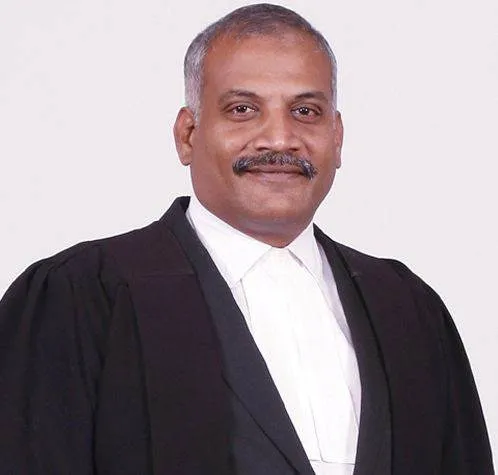
By Adv. Saravvanan R, Advocate · Reviewed by Advocate · Updated · 17 min read · Intellectual Property
Intellectual property law in India protects the results of creative and inventive work. It gives the owner exclusive rights for a defined time, and in some cases for as long as the owner keeps using the right. This guide covers trademarks, copyright, patents, designs, trade secrets and geographical indications, with steps, timelines, risks and remedies in plain words.
Rules, fees and forms change by notification. Always confirm the current position on IP India and India Code before acting.
Key Takeaways
- India has separate laws for each right: the Trade Marks Act, 1999, the Copyright Act, 1957, the Patents Act, 1970, the Designs Act, 2000 and the Geographical Indications of Goods Act, 1999.
- Copyright arises on creation. Trademarks, patents and designs are secured by registration.
- A trademark can be renewed every ten years without a fixed end. A patent lasts twenty years from filing.
- Search first. Most refusals and oppositions come from conflict with an earlier right.
- Trade secrets have no separate Act. Contracts and discipline inside the business are the real protection.
- Owners must act on infringement quickly. Delay weakens injunction requests.
- Startups should settle ownership of code, designs and brand with founders and staff in writing.
- Keep records of use, licences and assignments. They matter in every dispute.
What is intellectual property law?
Intellectual property (IP) means rights over creations of the mind. These include names, logos, books, films, software, inventions, product shapes and know-how. The law gives the owner the power to stop others from copying or using the creation without permission.
IP is a form of property. It can be sold, licensed, mortgaged and inherited. It can also be the most valuable asset of a company, especially a startup or a brand.
The main rights at a glance
| Right | Main law | What it protects | Term | Registration |
|---|---|---|---|---|
| Trademark | Trade Marks Act, 1999 | Brand names, logos, sound marks, shapes, colour combinations | Ten years, renewable without limit | Optional but strongly advised |
| Copyright | Copyright Act, 1957 | Literary, artistic, musical, dramatic works, films, sound recordings, software | Generally life of the author plus sixty years for many works | Not required |
| Patent | Patents Act, 1970 | New, inventive and industrially useful inventions | Twenty years from filing | Required |
| Design | Designs Act, 2000 | New and original shape, pattern or ornament on an article | Ten years, extendable by five years | Required |
| Geographical indication | GI of Goods Act, 1999 | Goods linked to a region, such as crafts or farm products | Ten years, renewable | Required |
| Trade secret | Contract and common law | Confidential business information | As long as it stays secret | None |
Other statutes cover semiconductor layout designs and plant varieties and farmers’ rights. They are narrower and are not covered in detail here.
Why India has so many Acts
Each right protects something different. A brand name belongs in trademark law. A song belongs in copyright. A new machine part may fall in patent law. The look of a bottle may fall in design law. One product can hold several rights at once. A smartphone, for example, carries patents, trademarks, designs and copyright in software.
For a short overview of the role of IP, see our note on the role of intellectual property law in protecting creative works and innovations.
Who needs intellectual property protection?
Almost every business has some IP. These groups need to pay particular attention.
- Startups and founders. Brand, code, product design and investor diligence all turn on IP ownership. See our startup legal checklist and startup business legal tips.
- Brand owners and retailers. Names, logos and packaging need trademark cover. See trademark protection for branding, SEO and advertising companies.
- Educators and coaching businesses. Course material and institute names are common targets for copying. See trademark and IP protection for coaching centers and educational brands.
- Creators, writers, artists and software developers. Copyright and licensing terms decide who earns from the work.
- Manufacturers and technology firms. Patents and designs protect products and processes.
- Franchisors and franchisees. The franchise rests on a licence of the brand and know-how. See franchise agreement drafting and compliance.
- Artisans and farmer groups. Geographical indications protect goods tied to a place.
- Investors and acquirers. They test the IP chain of title during diligence.
What is a trademark and how does the Trade Marks Act, 1999 protect it?
A trademark is a mark that can be represented graphically and that distinguishes the goods or services of one person from those of others. It can be a word, a logo, a letter, a numeral, a shape of goods, packaging or a combination of colours. The Act also covers certification marks, collective marks and well-known marks.
Classes and scope
Marks are registered for goods or services in classes under the Nice Classification. There are forty-five classes. A mark is registered only for the classes in the application. A brand that sells clothes and also runs a restaurant needs cover in more than one class.
Grounds of refusal
The Registrar can refuse a mark on two broad types of grounds.
- Absolute grounds under Section 9, such as a mark that lacks distinctive character, is purely descriptive, is generic or is likely to deceive the public.
- Relative grounds under Section 11, such as a mark identical or similar to an earlier mark for similar goods or services, which is likely to cause confusion.
Names like “Fresh Tea” or “Quick Courier” tend to meet objections because they describe the goods. Invented or arbitrary words are stronger.
Rights of the registered owner
A registered owner gets the exclusive right to use the mark for the registered goods or services and can sue for infringement. Registration is prima facie evidence of validity. It also helps in customs notices, marketplace takedowns and domain disputes.
Unregistered marks and passing off
Even without registration, a business with goodwill can bring an action for passing off. The claimant must show goodwill, a misrepresentation by the other side, and damage. Proof of reputation takes time and cost. Registration reduces that burden.
How does trademark registration work step by step?
Our page on trademark registration gives an overview. The steps are as follows.
- Search. Check the public database of the Trade Marks Registry for identical or similar marks in the same class. Also check domain names, company names and social media handles. A company name approved on the MCA portal does not give trademark rights. See company name approval and RUN guidelines.
- Select classes. Match each product and service to a class.
- File the application. File online with the representation of the mark, applicant details, user date (date of first use, or “proposed to be used”) and the power of attorney if an agent files.
- Formalities check. The Registry checks the application and issues a filing number.
- Examination. An examiner issues an examination report listing objections, if any.
- Reply and hearing. The applicant replies within the time allowed, usually one month. If the examiner is not satisfied, a hearing is held.
- Acceptance and publication. The accepted mark is advertised in the Trade Marks Journal.
- Opposition period. Third parties have four months from publication to file a notice of opposition.
- Registration. If there is no opposition, or if the opposition fails, the Registry issues the registration certificate.
The symbol TM can be used once the mark is claimed. The symbol R can be used only after registration.
Opposition and rectification
Anyone with a conflicting right can oppose a mark after publication. The applicant must file a counter-statement within the time given. Both sides file evidence and then a hearing follows. Opposition is a contested process and can run for years.
After registration, a person aggrieved can apply to rectify or cancel the mark, for example on the grounds of non-use or registration without sufficient cause. Applications and appeals once went to the Intellectual Property Appellate Board. That Board was abolished by the Tribunals Reforms Act, 2021, and its work now lies with the High Courts. See our note on the Intellectual Property Appellate Board and the article on safeguarding assets with the IPAB.
Renewal and international filings
A registration lasts ten years from the date of application and can be renewed for further ten year periods. A grace period with additional fees applies for late renewal, and restoration is possible after removal. India is a member of the Madrid Protocol, so an Indian applicant can seek protection abroad through a single international application, and foreign owners can designate India. Check the current procedure before filing.
Trademark and company or domain names
A company name, a domain name and a trademark are different. A company registration does not stop another person from registering the same word as a trademark. A domain name can be challenged under the dispute policy for the extension, such as the .in policy. Align all three early.
What is copyright and how is it protected under the Copyright Act, 1957?
Copyright protects original literary, dramatic, musical and artistic works, cinematograph films and sound recordings. It also covers computer programs as literary works. It protects expression, not ideas, facts or methods.
Ownership
The author is generally the first owner. There are exceptions. In a work made in the course of employment under a contract of service, the employer is the first owner unless there is an agreement to the contrary. For commissioned photographs, paintings and films, the position depends on the terms and the Act. Businesses should settle ownership in writing with freelancers and agencies.
Rights and moral rights
The owner has the right to reproduce, publish, communicate to the public, adapt and translate the work. The author also has moral rights, such as the right to claim authorship and to object to distortion that harms honour or reputation. Moral rights remain with the author even after assignment.
Term
For literary, dramatic, musical and artistic works, the term is generally the life of the author plus sixty years. The term for films, sound recordings and some other works is counted from publication. Check the section that applies to the work in question.
Registration
Registration is not required. It is still useful. A certificate from the Copyright Office is prima facie evidence of the particulars entered, and many courts and platforms ask for it. The steps are:
- Prepare the application with details of the author, owner and work.
- Give a statement on whether the work is published and, if so, where and when.
- File online with the prescribed fee.
- Wait for the diary number and the mandatory waiting period for objections.
- Respond to any objection or query.
- Receive the registration certificate.
Assignment and licence
Copyright can be assigned or licensed. An assignment must be in writing and signed by the assignor. It should state the work, the rights, the duration and the territory. If the duration is not stated, the law reads it as five years. If the territory is not stated, the law presumes India. Parties often miss these defaults. A licence may be exclusive or non-exclusive and should state the royalty and the audit rights. Statutory licences and special rules apply for certain uses such as broadcasting and cover versions.
Exceptions
The Act allows fair dealing for private use, research, criticism, review, reporting of current events and certain educational uses. It also has specific exceptions for software backup and interoperability. These are narrow and fact specific.
Infringement and remedies
Copying a substantial part of a work without permission infringes copyright. The owner can seek an injunction, damages or an account of profits, and delivery up of infringing copies. Criminal offences are also provided for knowing infringement, with imprisonment and fine. Procedure for criminal complaints is now under the Bharatiya Nagarik Suraksha Sanhita, 2023, which replaced the Code of Criminal Procedure from 1 July 2024.
What is a patent and how does the Patents Act, 1970 work?
A patent is a right given for an invention that is new, involves an inventive step and is capable of industrial application. The right lets the owner stop others from making, using, selling or importing the invention in India for twenty years from the date of filing, if the renewal fees are paid.
What cannot be patented
The Act lists matters that are not inventions or that are excluded. Examples include a mere discovery of a scientific principle, a mere new use of a known substance without enhanced efficacy, a mathematical or business method, a computer program per se, and methods of agriculture and horticulture. Software linked to a technical effect may still be examined for patentability. These rules are subtle and fact specific, so a technical review is needed before filing.
Patent filing steps
- Prior art search. Search patent databases and technical literature to see whether the idea is new.
- Provisional application, if needed. A provisional specification fixes an early filing date while the invention is still being developed. A complete specification must follow within twelve months.
- Complete specification. It describes the invention with claims, drawings and an abstract. The claims define the scope.
- Publication. The application is published after eighteen months from the filing or priority date, unless an early publication is requested.
- Request for examination. The applicant must request examination within the period prescribed by the Rules. Check the current period and whether expedited examination is available for your class of applicant.
- First examination report. The examiner raises objections.
- Reply and hearing. The applicant answers and may amend the claims.
- Grant. If the application meets all requirements, the Controller grants the patent.
Opposition and revocation
A third party may file a pre-grant opposition after publication and before grant. A post-grant opposition can be filed within twelve months of the publication of the grant. After that period, a patent can be revoked on petition on specified grounds. Appeals lie to the High Court.
Foreign filing and the PCT
An Indian resident must obtain permission before filing abroad for an invention made in India, unless an Indian application was filed first and the time period has passed. India is a member of the Patent Cooperation Treaty, which allows a single international application. National phase entry in India follows within the time the Rules set.
Working and compulsory licences
A patentee must work the patent in India and must file periodic statements on working. After three years, a person can seek a compulsory licence on grounds such as reasonable requirements of the public not being met. These provisions are rarely used but matter in pharmaceutical and public interest disputes.
Infringement and remedies
Infringement is the unauthorised making, using, offering, selling or importing of a patented product, or use of a patented process. The patentee can sue for an injunction, damages or an account of profits. The defendant often counter-claims for revocation. Courts weigh the claim language closely.
What is a design and how is it registered?
A design under the Designs Act, 2000 means the features of shape, configuration, pattern, ornament or composition of lines or colours applied to an article. It must appeal to the eye in the finished article. It does not cover mode of construction or a mere mechanical function.
Requirements
The design must be new and original, not published anywhere before the filing date, and not contrary to public order or morality. It must be registered for a specified class of articles under the Locarno classification.
Steps
- Search for similar designs.
- Prepare representation sheets with clear views of the article.
- File the application with a statement of novelty.
- Respond to the examiner’s objections.
- Receive registration.
Term
A registered design has an initial term of ten years, extendable by five years. Registration for a design that is also copyright protected can lose copyright once the article is produced industrially more than the limit the Act prescribes. This interplay with copyright is a common point of dispute, so an owner of artistic work used on products should take advice.
Infringement
Piracy of a registered design means applying the design or a fraudulent or obvious imitation to an article in the same class for sale without the owner’s consent. The remedies include an injunction and damages as the Act provides.
How are trade secrets and confidential information protected?
India has no stand-alone trade secret statute. The courts protect secrets through the law of confidence, the terms of contracts and employment duties. The Indian Contract Act, 1872 also limits post-employment non-compete clauses, as agreements in restraint of trade are generally void for the period after the contract. Confidentiality and non-solicitation terms drafted with care fare better.
What counts as a trade secret
Information that is secret, has commercial value because it is secret, and is subject to reasonable steps to keep it secret. Examples are formulas, customer lists, pricing models, source code and supplier terms.
Practical steps
- Use written non-disclosure agreements with employees, vendors and investors.
- Limit access by role and keep access logs.
- Mark documents as confidential and use secure storage.
- Include return and deletion duties at exit.
- Keep an exit checklist and a reminder letter to departing staff.
- Review data protection duties under the cyber and data laws. See the cyber law and data protection pillar.
Courts can grant injunctions against misuse of confidential information, award damages and order return of material. Criminal law may also apply where there is theft or breach of trust, under the Bharatiya Nyaya Sanhita, 2023, which replaced the Indian Penal Code from 1 July 2024.
What are geographical indications?
A geographical indication (GI) identifies goods as coming from a territory, where a given quality, reputation or other characteristic is essentially due to the place of origin. Examples in India include crafts, textiles and farm products. The Geographical Indications of Goods (Registration and Protection) Act, 1999 governs them, and the GI Registry sits in Chennai.
Registration steps
- An association of persons, producers or an organisation established by law applies.
- The application describes the goods, the area, the quality and the method of production, along with a map and the historical proof.
- A consultative group examines it.
- The application is published, and objections may be filed.
- After registration, authorised users must be registered.
A GI lasts ten years and is renewable. A GI is a collective right and is not owned by one person, so it differs from a trademark. A GI owner can act against misuse that misleads the public about origin.
How do licensing and assignment of IP work?
An owner can transfer or license IP. The difference matters.
- Assignment transfers ownership. The assignee becomes the owner, subject to the terms.
- Licence gives permission to use. The licensor remains the owner.
Key terms to include
- Description of the IP, with registration numbers.
- Scope: field, products, territory and duration.
- Exclusive, sole or non-exclusive nature.
- Royalty, minimum guarantee and payment schedule, with audit rights.
- Quality control, which is vital for trademark licences, so that the mark does not lose distinction.
- Improvements and ownership of derivative works.
- Warranties on ownership and non-infringement.
- Indemnity, limit of liability and termination.
- Governing law and dispute resolution. See arbitration clause drafting in India.
Recording and stamp duty
An assignment of a registered trademark, patent or design should be recorded at the relevant office to bind third parties. Stamp duty on assignment and licence documents depends on the state law, and Tamil Nadu and other states have their own rules. Check the stamp rules for the place where the document is signed.
Tax and FEMA aspects
Royalty and licence fees have tax treatment, including withholding, which differs for resident and non-resident parties. Payments to foreign licensors may also involve foreign exchange compliance. Take tax advice on structure. Our FDI guide touches the cross-border side.
Franchise structures
A franchise licenses the brand, systems and know-how. The franchise agreement should align the trademark licence, confidentiality terms and exit rules. See franchise agreement drafting and compliance.
How should startups handle intellectual property?
Early stage companies often lose IP by informality. These steps reduce risk.
- Choose a brand that can be protected. Check for conflicts before printing material or buying a domain. File a trademark application early. Align the company name, domain and handle.
- Assign founder IP to the company. Founders often create the brand, code and designs before the company exists. A written assignment moves ownership to the entity.
- Employee and contractor agreements. Include assignment of work product, confidentiality and non-solicitation terms.
- Open source and third-party code. Keep a record of licences, because some open source terms impose duties on the product.
- Protect core inventions. If there is a technical invention, consider a provisional patent before public launch, since public disclosure can destroy novelty.
- Mind the investor diligence list. Investors look for chain of title, registrations, licences, pending claims and employee agreements. Our guides on company incorporation, shareholders’ agreements and ESOPs help align the corporate side.
- Use startup benefits. Recognised startups can use reduced fees and, for patents, a faster examination route, subject to the current rules. Verify eligibility and the DPIIT recognition requirements.
- Data and privacy. If the product handles personal data, align with the data protection law. See IT compliance, data privacy and blockchain legal solutions for startups.
For a broader checklist on legal basics for new ventures, see corporate legal services for startups.
What documents are required?
Documents vary by right. The following lists are a general guide.
Trademark
- Applicant name, address and constitution (individual, company, LLP, partnership).
- Representation of the mark in the required format.
- List of goods or services and classes.
- Date of first use with proof, such as invoices, ads and website records, if the mark is already in use.
- Power of attorney if an agent files.
- Startup or small enterprise proof if claiming reduced fees.
Copyright
- Copies of the work, and a summary for software with source code extracts as the rules require.
- Author and owner details and a no-objection letter from the author if the applicant is not the author.
- Proof of assignment or licence, if relevant.
- Statement of publication and country of first publication.
Patent
- Applicant and inventor details, and proof of right to apply.
- Provisional or complete specification with claims, drawings and abstract.
- Declaration of inventorship and, for Indian residents, foreign filing details and permission where required.
- Priority documents for convention applications.
- Request for examination and fee proof.
Design
- Representation sheets with views of the article.
- Statement of novelty and class of the article.
- Applicant details and power of attorney.
GI
- Statement of case, class of goods and map of the area.
- Standard of production, inspection structure and proof of origin.
- Details of producers or association.
For enforcement
- Registration certificates or proof of use and reputation.
- Evidence of infringement, such as screenshots, test purchases and invoices.
- Notice, reply and chronology.
- Sales and marketing records to show goodwill and loss.
What is the timeline for each IP right?
Timelines depend on the office, the subject matter and any objection or opposition. The table lists the statutory markers only. Actual time varies, and it is wise to check the status on the portal.
| Right | Key time markers |
|---|---|
| Trademark | Reply to examination report within one month. Four months opposition window after publication. Ten year term, renewable. |
| Copyright | Registration after a waiting period for objections. Term depends on the class of work, generally sixty years after the author’s death for many works. |
| Patent | Provisional followed by complete specification within twelve months. Publication at eighteen months. Request for examination within the prescribed period. Post-grant opposition within twelve months of grant publication. Twenty year term from filing. |
| Design | Ten year term, extendable by five years. |
| GI | Ten year term, renewable. Publication and objection period applies. |
| Trade secret | No term. Lasts while secrecy is kept. |
Registration can take from a few months to several years across rights. Patents are generally the slowest, and contested trademarks can take years.
What cost factors should you consider?
This guide gives no fee tables, because government fees depend on the type of applicant, the mode of filing and the number of classes or claims, and they are revised from time to time. Check the current fee schedule on IP India.
- Official fees. Per class for trademarks, per application and per claim for patents, per design, with different rates for individuals, startups, small entities and others.
- Professional fees. Search, drafting, filing, responses and hearings. Patent drafting needs technical skill and often costs more than other filings. See also our note on lawyer fees.
- Number of classes or jurisdictions. Each additional class or country adds cost.
- Objections and oppositions. Contested matters involve evidence, hearings and appeals.
- Renewal and annual fees. Patents need annual renewals, and trademarks need renewal every ten years.
- Enforcement costs. Suits, interim injunction applications, local commissioners and expert evidence add to cost.
- Cost of not filing. Re-branding after a dispute, loss of stock and loss of goodwill can far exceed filing costs.
How are IP rights enforced and what are the remedies?
Enforcement begins with evidence and ends, in many cases, with a settlement. A typical path:
- Gather evidence. Capture web pages, packaging, invoices, advertisements and test purchase records with dates.
- Check your rights. Confirm registration, validity, scope and your own use.
- Send a notice. A cease and desist notice states the right, the infringing act and the demand. Avoid threats that could be labelled groundless. The Trade Marks Act has a remedy against groundless threats of infringement proceedings.
- Platform and registry actions. Use notice and takedown routes on marketplaces and social media, and domain dispute policies. Customs recordation is available for certain rights.
- File a suit. An infringement suit is filed in the court with jurisdiction. Under the Trade Marks Act, the plaintiff can sue where he carries on business, and not only where the defendant does. Commercial Courts handle IP suits above the specified value, and High Courts with original jurisdiction hear many IP matters.
- Seek interim relief. An injunction, an Anton Piller style order for search and seizure, a John Doe order against unknown infringers and asset disclosure are among the tools courts have used. Delay in approaching the court weakens such requests.
- Final relief. A permanent injunction, damages or an account of profits, delivery up and costs.
- Criminal complaint. Offences like applying a false trademark or knowingly using pirated copies attract criminal action. Police action needs proper complaint steps.
- Settlement and mediation. Many IP disputes settle through coexistence or licence. Pre-institution mediation is required for commercial suits unless urgent interim relief is sought.
An appeal against an order of the Registrar in trademark, patent or design matters goes to the High Court after the abolition of the IPAB.
What are the risks and common mistakes?
Risks
- Conflicting earlier rights. A mark or design may infringe someone else’s right.
- Loss of novelty. Public disclosure before filing destroys patent and design novelty.
- Weak ownership. Work by freelancers or employees without a written assignment may not belong to the company.
- Non-use. A registered trademark not used for five years can be removed on application.
- Genericide. Allowing a brand to become the common name of a product weakens it.
- Lapse. Missed renewals and annual fees cause loss of rights.
- Wrongful threats and delay. Weak notices or late action harm remedies.
- Data and confidentiality leaks. Staff exit and vendors are common leak points.
Common mistakes
- Choosing a descriptive brand name and expecting registration.
- Filing in one class when the business spans several.
- Printing material and launching before a clearance search.
- Relying on company registration as brand protection.
- Assuming the person who paid for a logo or website owns the copyright.
- Publishing the invention at a conference or on a website before filing.
- Giving an exclusive licence without quality control and audit clauses.
- Ignoring an opposition notice or an examination report deadline.
- Using the R symbol before registration, which is misleading.
- Not recording assignments and licences.
- Failing to keep evidence of use and sales.
How do IP rights compare in practice?
A short comparison helps choose the right tool for an asset.
| Question | Trademark | Copyright | Patent | Design | Trade secret |
|---|---|---|---|---|---|
| Protects | Brand identity | Expression of ideas | Technical solution | Look of the product | Confidential know-how |
| Arises by | Use or registration | Creation | Grant | Registration | Secrecy and contract |
| Needs novelty | No, but distinctiveness | Originality only | Yes, with inventive step | Yes | Not in the patent sense |
| Duration | Unlimited with renewal | Long, set by statute | Twenty years | Up to fifteen years | While secret |
| Disclosure | Public register | Optional | Full public disclosure | Public register | Must not be disclosed |
| Typical dispute forum | Civil court, Registrar | Civil court, Copyright Board for some matters | High Court, Controller | High Court, Controller | Civil court on confidence and contract |
Some assets suit more than one right. A product packaging can have a trademark in the logo, copyright in the artwork and a design in the shape. A software product can hold copyright in code and trademark in the name, and it may have a patent in a technical process in some cases.
How do IP rights connect with other practice areas?
IP issues cross into other fields of law.
- Contracts. Assignments, licences, NDAs and development agreements. See the arbitration and ADR pillar for dispute clauses.
- Cyber and data law. Domain names, online infringement, platform liability and data. See the cyber law and data protection pillar.
- Corporate and funding. Chain of title in diligence and share issues. See our FDI guide.
- Insolvency. Brands and patents are assets in a sale or liquidation, and licences are affected by insolvency. See the insolvency, bankruptcy and debt recovery pillar.
- Tax. Royalty, depreciation and transfer pricing. See the tax, labour and regulatory disputes pillar.
- Real estate and trade names. Names of projects and developers. See the property and real estate pillar.
Where can you check official information?
Registers, forms, fee schedules, journals and status searches are on the IP India portal. Acts and rules are on India Code. Court orders are on the eCourts portal. Because the rules change, check the current position before every filing. The FAQ section above answers the most common questions.
For general information on your matter, you may contact the firm.
This article is general information, not legal advice. Reading it does not create an advocate-client relationship.
Frequently Asked Questions
What are the main types of intellectual property in India?
Is registration compulsory for a trademark in India?
How long does trademark registration take in India?
Do I need to register copyright to be protected?
How long does a patent last in India?
What can I do if someone copies my trademark?
Are trade secrets protected in India?
Should a startup file IP before raising funds?
Topics: TrademarkCopyrightPatentStartups & MSMEs
Related reading
- Trademark Registration in India: Process and Validity
- Intellectual Property Appellate Board (IPAB): Role
- Trademark Protection for Branding and Ad Agencies
- Trademark Protection for Coaching Centers in India
- Company Name Approval: RUN Portal Guidelines
- Startup Legal Checklist India: Founders, ESOP, IP
- Role of Intellectual Property Law in Protecting Innovation
- Franchise Agreement in India: Key Clauses and Drafting
This article is general information, not legal advice. Reading it does not create an advocate-client relationship. Read the disclaimer. Official sources: India Code, Bar Council of India.