Post-Incorporation Compliance Checklist for Companies
By Adv. Saravvanan R, Advocate · Reviewed by Advocate · Updated · 7 min read · Tax & Labour Disputes
Short answer
After incorporation, a new company should hold its first board meeting, appoint an auditor, open a bank account, issue shares, keep statutory registers and obtain tax and labour registrations. Timely filings under the Companies Act, 2013 avoid penalties and strengthen investor confidence.
Post-Incorporation Compliance - Starting a company marks only the beginning of legal responsibilities. Every newly incorporated company must satisfy statutory obligations under the Companies Act, 2013. Therefore, promoters should establish a compliance framework immediately after incorporation. Directors must secure regulatory registrations, maintain records, and ensure timely filings. Moreover, non-compliance may attract penalties, disqualification risks, and regulatory scrutiny. The Ministry of Corporate Affairs, Income Tax Department, GST authorities, and labour departments monitor compliance obligations. Businesses must also preserve records for potential proceedings before tribunals and courts. Legal support helps companies identify risks and implement effective governance systems. Consequently, a structured compliance checklist protects operations and enhances investor confidence. Proper compliance also strengthens credibility with lenders, customers, vendors, and regulators.
Post-Incorporation Compliance Checklist for New Companies - Empower Legal - Corporate Law Firm
| Compliance Area | Authority |
|---|---|
| Company Filings | MCA |
| Income Tax | CBDT |
| GST Compliance | GST Department |
| Labour Laws | Labour Department |
First Steps After Company Incorporation
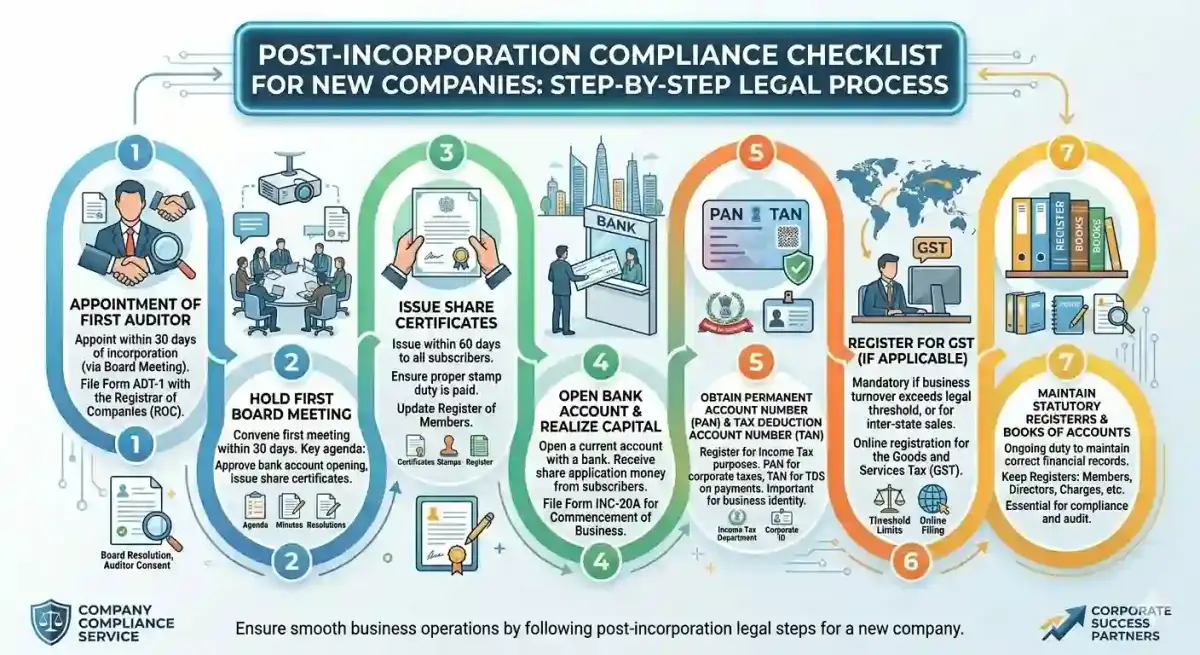
New companies must complete several immediate actions following incorporation. Directors should convene the first board meeting within prescribed timelines. Additionally, companies must appoint auditors and approve statutory registers. Opening a corporate bank account remains equally important. Businesses should also issue share certificates and maintain shareholder records. Therefore, founders must prioritize governance and documentation requirements. Timely compliance reduces future disputes and regulatory complications. Lawyers assist companies with resolutions, board procedures, and corporate documentation. Consequently, organizations establish a strong legal foundation. Effective implementation supports sustainable growth and regulatory confidence.
Mandatory Corporate Records and Registers
Every company must maintain statutory records accurately and consistently. These records demonstrate transparency and support legal compliance obligations. Moreover, regulators may inspect records during investigations or proceedings.
Essential Records
- Register of Members
- Register of Directors
- Share Certificates
- Minutes Books
- Statutory Registers
Proper record maintenance simplifies audits and regulatory reviews. Therefore, companies should implement document retention policies from inception.
Appointment of Auditors and Financial Compliance
Auditor appointment remains a critical post-incorporation obligation. Companies must appoint a statutory auditor within applicable timelines. Furthermore, financial records require accurate maintenance from the first transaction. Accounting systems should capture income, expenses, and tax liabilities properly. Therefore, directors must establish internal financial controls early. Professional advisors assist with accounting compliance and reporting requirements.
Financial Compliance Checklist
- Auditor Appointment
- Bookkeeping Setup
- Financial Controls
- Accounting Policies
- Tax Planning Measures
Tax Registrations and Government Approvals
Tax compliance forms an essential component of corporate governance. Companies must obtain PAN and TAN immediately after incorporation. Additionally, GST registration may become mandatory based on turnover and business activities. Professional tax and sector-specific registrations may also apply. Therefore, businesses should evaluate every regulatory requirement carefully. Timely registrations prevent penalties and operational disruptions.
Corporate Governance and Board Responsibilities
Corporate governance ensures accountability and lawful decision-making. Directors owe fiduciary duties toward the company and stakeholders. Moreover, board decisions must align with statutory requirements and corporate objectives. Companies should document resolutions and maintain meeting records carefully. Therefore, governance frameworks help reduce legal risks and management disputes. Legal advisors assist directors in understanding obligations and compliance expectations. Consequently, organizations achieve stronger regulatory standing and operational stability.
Conducting Board Meetings and Resolutions
Board meetings facilitate effective management and strategic planning. Directors should discuss compliance obligations, finances, and operational matters regularly. Furthermore, resolutions must reflect accurate decisions and legal requirements. Meeting notices and minutes require proper documentation. Therefore, companies should establish standardized governance procedures. Consistent compliance strengthens transparency and regulatory confidence.
| Governance Requirement | Purpose |
|---|---|
| Board Meetings | Strategic Decisions |
| Minutes Maintenance | Legal Evidence |
| Resolutions | Corporate Authorization |
| Compliance Reviews | Risk Reduction |
Labour Law and Employment Compliance
Employment compliance begins immediately after hiring personnel. Companies must comply with labour statutes, wage regulations, and workplace obligations. Additionally, employee contracts should clearly define rights and responsibilities. Provident Fund, ESI, and professional tax registrations may become necessary. Therefore, businesses should evaluate workforce-related obligations carefully. Legal guidance reduces employment disputes and regulatory exposure.
Data Protection and Contract Management
Modern businesses process sensitive customer and employee information. Therefore, data governance policies require immediate implementation. Companies should also prepare legally compliant contracts with vendors, customers, and service providers. Moreover, contractual clarity reduces disputes and protects commercial interests. Legal professionals review agreements and identify potential risks. Consequently, businesses improve operational security and compliance readiness.
Regulatory Filings and Annual Obligations
Post-incorporation compliance extends beyond initial registrations. Companies must complete recurring filings with regulatory authorities. Furthermore, annual compliance obligations require careful monitoring. Directors should maintain a compliance calendar for important deadlines. Therefore, organizations avoid penalties and filing defaults. Professional support ensures accurate and timely submissions. Consistent compliance demonstrates responsible corporate management.
MCA Compliance and ROC Filings
The Registrar of Companies monitors statutory filing obligations. Companies must submit annual returns, financial statements, and event-based filings. Additionally, changes involving directors, shareholders, and registered offices require reporting. Therefore, businesses should maintain updated corporate records continuously. Professional advisors help manage filing obligations efficiently.
Consequences of Non-Compliance
Non-compliance may trigger significant legal and financial consequences. Authorities can impose penalties, initiate prosecutions, and restrict corporate activities. Moreover, directors may face disqualification in serious cases. Regulatory investigations often increase operational burdens and reputational risks. Therefore, proactive compliance remains the best risk-management strategy. Legal representation helps address notices and enforcement proceedings effectively.
Potential Consequences
- Monetary Penalties
- Director Disqualification
- Regulatory Investigations
- Litigation Risks
- Business Disruptions
Legal Support for Post-Incorporation Compliance
Legal assistance helps companies satisfy evolving compliance requirements. Lawyers review corporate structures, identify risks, and implement governance frameworks. Furthermore, legal professionals assist with filings, resolutions, contracts, and regulatory interactions. Companies benefit from proactive compliance planning and timely advice. Therefore, businesses reduce exposure to penalties and disputes. Legal support also becomes valuable during inspections, investigations, and tribunal proceedings. Consequently, organizations maintain regulatory confidence and operational continuity.
Forums, Authorities and Legal Remedies
Corporate compliance disputes may involve several authorities and forums. Matters may arise before the Registrar of Companies, Income Tax authorities, GST authorities, and labour departments. Additionally, certain disputes reach the National Company Law Tribunal. Civil disputes may proceed under the Code of Civil Procedure. Fraud allegations may attract provisions under BNS, BNSS, and BSA. Therefore, companies should seek immediate legal advice after receiving notices. Early action improves compliance outcomes and reduces litigation risks.
Why Choose Empower Legal - Corporate Law Firm
Empower Legal - Corporate Law Firm assists startups, private companies, subsidiaries, and growing enterprises. The firm provides guidance on post-incorporation compliance, corporate governance, tax registrations, and regulatory filings. Furthermore, lawyers handle notices, inspections, disputes, and compliance audits. Clients receive practical solutions tailored to business objectives. Therefore, companies can focus on growth while maintaining regulatory compliance. Strategic legal support minimizes risks and promotes long-term corporate success.
Frequently Asked Questions
Q1. What is the first compliance requirement after incorporation?
Companies should hold the first board meeting, appoint auditors, maintain registers, and establish governance procedures promptly.
Q2. Is GST registration mandatory for every company?
No. GST registration depends upon turnover thresholds, business activities, and statutory registration requirements.
Q3. What happens if ROC filings are delayed?
Delayed filings may attract penalties, additional fees, regulatory scrutiny, and compliance-related complications.
Q4. Why are statutory registers important?
Statutory registers demonstrate legal compliance, ownership details, governance records, and regulatory transparency.
Q5. Can directors face liability for non-compliance?
Yes. Directors may face penalties, disqualification proceedings, investigations, and other statutory consequences.
Q6. How can legal professionals assist new companies?
Lawyers provide compliance planning, filing support, governance advice, contract reviews, and representation before authorities.
Read More
- Certificate of Incorporation: Understanding Your Company’s Birth Certificate
- Registered Office Requirements and Documentation
- Memorandum and Articles of Association: Drafting Guidelines
- SPICe+ Form Filing: Step-by-Step Incorporation Guide
- Company Name Approval: RUN Portal Guidelines and Best Practices
- Ministry of Corporate Affairs (MCA)
Frequently Asked Questions
What are the first steps after incorporation?
Which registrations may a new company need?
What happens if compliance is missed?
Topics: ComplianceLabour LawContractsGST
Related reading
This article is general information, not legal advice. Reading it does not create an advocate-client relationship. Read the disclaimer. Official sources: India Code, Bar Council of India.